
When to Schedule a Pressure Vessel Inspection in Canberra
Pressure vessels don’t fail on a neat schedule, so inspection timing can’t rely on one either. The right date for a site in Canberra comes from equipment type, service conditions, past results, and a competent inspector’s assessment against maker guidance and AS/NZS 3788.
Why there is no single date for every vessel
A small expansion vessel on a commercial heating loop and a steam boiler in a plant room may both hold pressure, but they don’t carry the same stress. Operating pressure, temperature swings, duty cycle, and age all change how fast a vessel degrades. A vessel that cycles hard every day faces different fatigue and wear than one that sits mostly steady. That’s why a calendar date borrowed from another site is a poor guide. The interval has to fit the actual equipment and the way it’s run.
Corrosion is the usual reason intervals get shortened. Poor water chemistry, dissolved oxygen, scale buildup, and flow effects can thin walls from the inside where paint still looks fine outside. Erosion in high-flow areas and cracking at welds and heat-affected zones can add to the loss. Ultrasonic thickness testing tracks that change by comparing current wall readings with earlier ones, so trends matter more than a single number. When readings move, the inspector may bring the next date forward even if the vessel looks tidy.
Risk-based thinking ties those facts together. Instead of setting the same interval for all equipment, the inspector weighs condition, operating history, failure consequence, and access needs. AS/NZS 3788 is the reference most inspectors in Australia use to frame that judgment, along with maker manuals and past reports. It doesn’t hand a site manager a do-it-yourself date. It gives a competent person a structured way to recommend one.
Age alone doesn’t set the date, but it changes the questions. Older vessels with patchy records, past repairs, unknown history, and gaps in logs often need closer attention until a trend is established. Newer equipment with clean baselines and steady logs can sometimes keep a longer interval if the inspector documents why. Either way, the reason should be written down.
What sets the interval for your equipment
Four inputs decide most dates: equipment design and classification, the rules that apply to that type, maker guidance, and service history. A competent inspector reads them together rather than picking one. For example, a steam system that runs long hours at high pressure and temperature is judged differently from an expansion vessel on a stable hot water loop. Service conditions like cycling, water quality, operating logs, and load patterns count as much as nameplate data.
Safety valves and pressure relief devices have their own inspection timing. They can foul or stick while the vessel itself still looks sound, so test timing is set on its own merits. The inspector considers device type, service conditions, past test results, and maker guidance before naming the next test date. Ultrasonic thickness results feed the same decision for the shell and welds. There’s no shortcut around that assessment.
New, repaired, altered, and relocated vessels need a check before return to service. That check confirms the work matches the design intent and that paperwork lines up with the physical equipment. A shift in duty can make an old interval unsafe to keep, such as higher load, longer hours, different fluid, or a move to another part of the building.
Paperwork helps the inspector set an appropriate date. Nameplate data, maker manuals, install dates, and prior certificates give context that a visual check can’t. Where manuals are missing, operating limits and relief settings need extra care. Don’t guess at missing data. Ask the maker or a competent person to confirm what applies.
How past records shape the next due date
An inspection date should never be set without opening the file first. The last report, thickness readings, repair notes, and operating logs show whether the vessel’s condition is stable or changing. A flat trend with no new defects supports the existing interval. A thinning spot that grew since the prior visit points the other way.
Follow-up matters because many reports list actions that have to close out before the next cycle can stay as planned, such as gasket renewal, support repairs, insulation fixes, or recalibration of gauges and controls. If those actions were done on time and logged with dates and photos, the inspector has a clear basis to keep the interval within the standard’s guidance. If they were left open, the next due date often moves earlier until the gaps are closed. That history is why files should stay linked to the asset, not filed by year alone.
Keep the file where the people who need it can find it. Scanned reports in a shared folder beat paper in a locked office when a breakdown happens after hours. Tag numbers should match the labels on the plant. Dates should be written the same way every time.
Warning signs that should bring the inspection forward
Dates on paper assume nothing changed. Signs of trouble at the plant should prompt a review of the booking rather than waiting for the scheduled visit. The signs below don’t diagnose the fault by themselves, but they mean a competent person should review the equipment promptly.
-
Safety valve lifts more often than usual or fails to reseat cleanly.
-
Rust blooms, scale, or staining around seams, nozzles, supports, and brackets.
-
Dampness or drips at joints that were previously dry.
-
Insulation that stays wet and shows brown or green discoloration.
-
Pressure readings that swing, creep, drift, and won’t hold setpoint.
-
Loud water hammer, knocking, rumbling, and vibration during startup and cycling.
-
Fuel or power use that climbs without a clear change in load.
Don’t wait for the date if these appear.
Have trained staff manage the equipment and access to the area. Call a qualified inspector for advice on safe isolation and next steps. A record of the time and readings, along with sounds and photos, helps the inspector decide whether the vessel can stay in service with controls or must be taken offline for internal access.
What a proper inspection usually includes
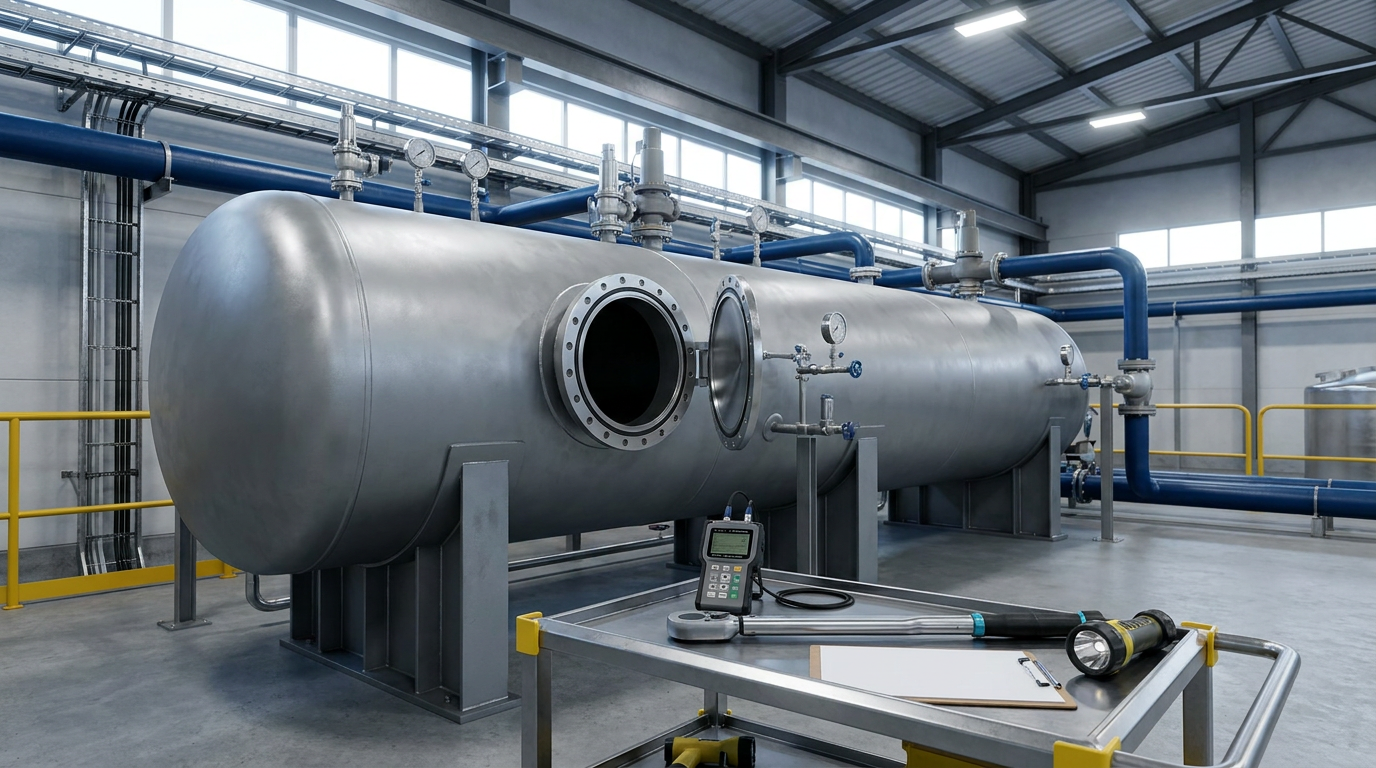
A proper inspection involves a documented process, with more work than a quick walk-around with a flashlight. Access has to be arranged and the vessel has to be made safe to open where internal entry is required. Trained staff have to stay involved. The inspector then works through a set pattern that can be repeated next time, so results can be compared year to year. A documented program that covers visual checks, ultrasonic thickness testing, safety valve testing, and compliance reporting is described in more detail on the Pressure Vessel Inspection Services Canberra page.
External checks look for distortion, support damage, corrosion under insulation, and coating breakdown. Internal checks, where entry is possible and safe, look at plates, welds, stays, and fittings for pitting, cracking, scale, and deformation. Ultrasonic thickness testing then puts numbers to what the eye sees. Readings are taken at defined points that match prior surveys.
Safety valve and controls testing is handled as its own task with calibrated gear, and results are logged against setpoints rather than memory. Past reports are reviewed beside the new findings so trends are clear. The final report ties defects to photos and readings and names the next steps with timeframes.
Where defects are found, the report should state whether the vessel can run under controls or needs repair first. Retests after gasket work, valve resets, gauge replacement, and insulation repairs complete the process. Those retests are part of timing too, since the next full interval shouldn’t start until outstanding items are cleared.
How to time the job around shutdowns and winter demand
Even when the due date is set, the calendar week still matters. Shutdowns cost less when demand is low and access is clear, with parts staged without rushing. Many Canberra sites find late summer and early fall suit heating plant because loads are light and days are longer for cooling down and opening. Booking early for that planned shutdown window beats chasing availability.
For heating boilers, the inspection and any follow-up repairs should be finished before winter demand begins, not during peak operation when taking a vessel offline affects occupants and backup options are thin. That lead time lets the team order gaskets, valves, probes, and seals if the inspection finds wear, retest after the fix, and file the report while the plant is still steady. Body corporates and facility managers often lock that sequence in months ahead, with tenants notified about access times.
Safe timing is also about people. A shutdown plan names who isolates the plant, who holds permits, who stays on-site during opening, and who signs off on return to service. Trained staff control each step and keep the area clear of anyone not needed for the job. Rushing that plan to hit a date undermines the value of the inspection itself.
How to keep a register and stay on schedule
A simple asset register prevents most missed dates. Each line holds the tag number, plant location, service description, and last inspection date alongside the next due date and the inspector’s notes. Photos of nameplates and past reports can sit in the same folder. When the register is current, anyone can answer what is due and when.
Scheduling works best when it starts from the register, not from memory. Set a reminder eight to twelve weeks before the due date so access, shutdown time, budget, and parts can be lined up. Share the date with operations, maintenance, tenants, and building users so no one books around it by accident. If operating hours change or a new process ties into the vessel, ask the inspector whether the date should move.
Over time the register becomes the basis for a documented inspection program that reflects actual risk rather than habit. The inspector reviews trends, service changes, defect history, and operating logs before confirming or adjusting the next interval. When people search for Pressure Vessel Inspection Services in Canberra, they are often looking for that steady program, not a one-off visit. Sites that keep it current spend less time scrambling and more time running.
The right inspection date is the one that fits the vessel and the record. Set it with a competent person and bring it forward when plant signals change. Time the work for low demand. A clean register keeps that cycle easy to repeat.