
How Precision Manufacturing is Reshaping Modern Supply Chains
Supply chains don’t break because there may or may not be perfect strategy documents in place. They break because a certain part is 0.2mm off. A batch is scrapped. A product launch slips six weeks. Precision manufacturing goes right at that failure point. Not by making it more complex, but by removing the variability that makes supply chains so fragile to begin with.
Tolerance isn’t just a technical spec – it’s a business decision
Each part of a product has a range of tolerance – a bracket within which the part can deviate from its design and still properly function. In a lot of the world’s manufacturing facilities, that tolerance range is treated more like a goal than a boundary. The tolerance is exceeded, the parts get reworked or rejected, the assembly is delayed or done with inferior-quality parts that lead to failure, rework cycles, and rejected parts for the assembly line after it. Once this starts happening, the problem just magnifies all the way down the supply chain.
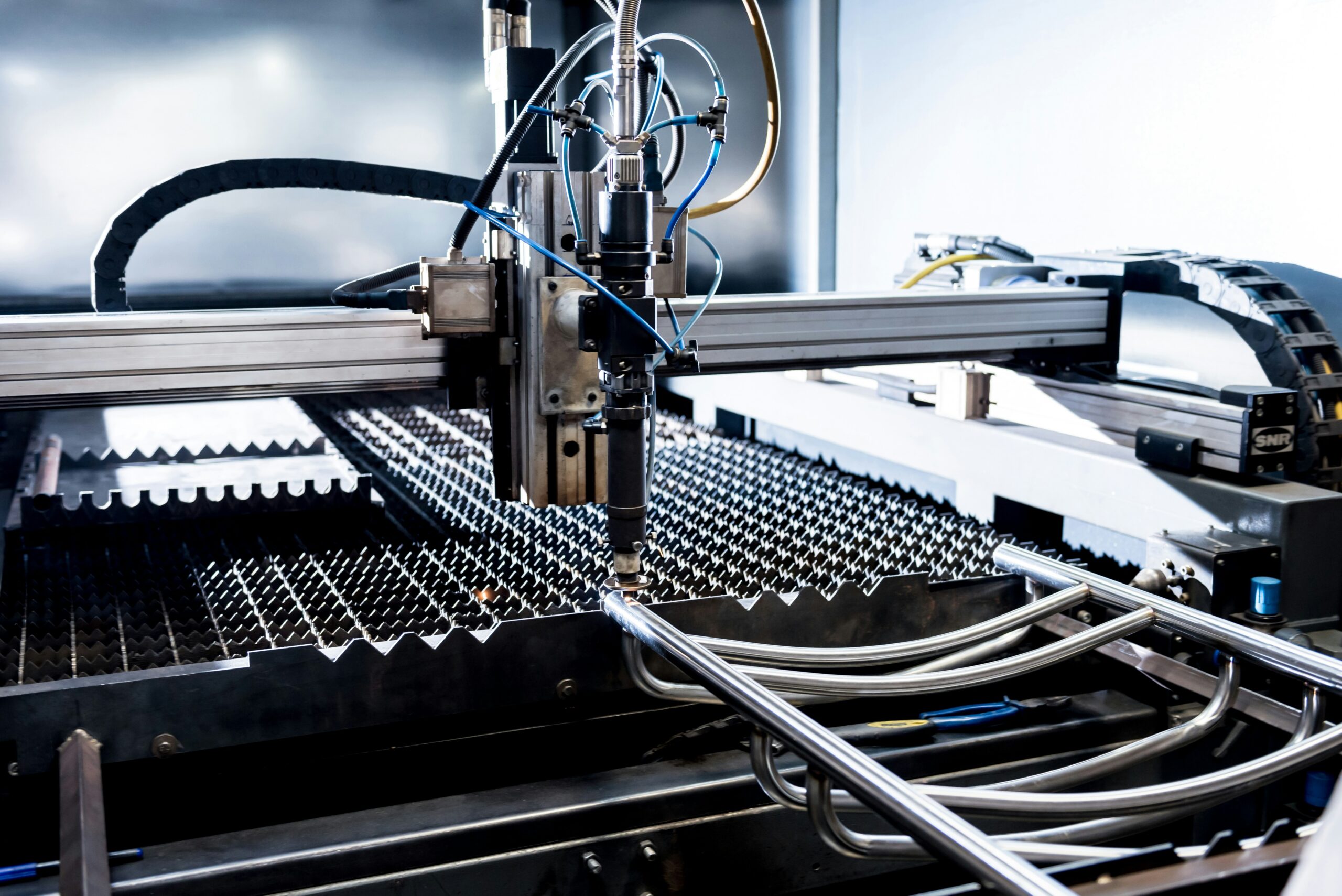
Precision manufacturing treats tolerance as fixed. CNC machining holds dimensions to within a few microns. When components arrive at exact specification every time, the downstream assembly process doesn’t need buffer inventory to account for variation. That single change – consistent, repeatable accuracy – is what makes just-in-time manufacturing actually work, rather than just sound good in a planning meeting.
Where Tier 1 and Tier 2 sourcing decisions actually matter
OEMs concentrate on final assembly and system integration. The components required to operate those systems are supplied by Tier 1 and Tier 2 suppliers – and the strength of those relationships determines whether an OEM’s supply chain stays intact when facing pressure or disintegrates when demand increases.
This is where sourcing decisions transform into strategic ones. A Tier 2 supplier that has ISO 9001 certification and operates quality management processes that are verified isn’t simply meeting a compliance guideline. It’s providing the OEM with something more important: foresight. When an OEM needs complex fabricated components, collaborating with a partner like https://amgindustries.com – one that specializes in precision fabrication rather than general-purpose production – eliminates one type of risk from the overall supply chain. Scrap rates, rework delays, and fit failures do not occur with supplies from a source that is entirely focused on tight tolerances.
The localization argument
Global supply chains only made sense when the delta between what you paid your workers in one country and what they made in another outweighed the cost of getting those goods to where they needed to go. Today, it’s becoming obvious that that calculus isn’t quite as exact as once believed. Shipping route volatility, port congestion, and geopolitical disturbance have made many companies realize just how precarious it is to be dependent on routes thousands of miles long and multiple countries downstream.
Precision CNC technology has made localized micro-factories viable. A smaller, well-equipped facility running five-axis machining centers can produce complex components at tolerances that weren’t achievable without large-scale industrial infrastructure twenty years ago. Companies are using this to shorten lead times and reduce their dependence on long international shipping lanes. The trade-off isn’t quality anymore – a precision shop in one country can machine a part that fits perfectly into an assembly on another continent without any manual adjustment. High-precision standards function as a universal specification language.
Miniaturization is changing what supply chains carry
The shift toward smaller, higher-value components in electronics and medical devices has changed the physical character of supply chains. Bulk commodity logistics is giving way to high-mix, low-volume precision parts that carry more value per kilogram and require tighter handling and quality verification.
Additive manufacturing and subtractive machining now work together on this. 3D printing handles complex geometries that traditional milling can’t reach. CNC subtractive processes deliver the surface finish and dimensional accuracy that printed parts often can’t hold on their own. The combination gives supply chain planners more options for sourcing complex components without compromising on specification.
Digital twins are accelerating this further. Before a part is ever machined, manufacturers can simulate its performance and verify that it will meet specification in the actual assembly environment. That upstream validation reduces the chance of discovering a design problem after tooling is already cut and a production run is underway.
Predictability is the real supply chain advantage
Real-time performance data is funneled back to monitoring systems by IoT sensors that are integrated into precision machining equipment. When a tool exhibits wear patterns that indicate a quality deviation, predictive maintenance takes over before the machine begins to produce sub-standard parts. This is not a technology narrative – it’s a supply chain continuity narrative. Unexpected downtime in a precision component supplier impacts not only the output of that supplier. It stops the assembly line.
The companies that are constructing resilient supply chains are not necessarily increasing the number of suppliers they buy from to spread risk. They are going deeper into fewer, more capable partners – ones with tightly controlled processes so that the component that arrives on Tuesday is the same as the one that arrived six months ago.
That level of consistency is what supply chain resilience is really about.